
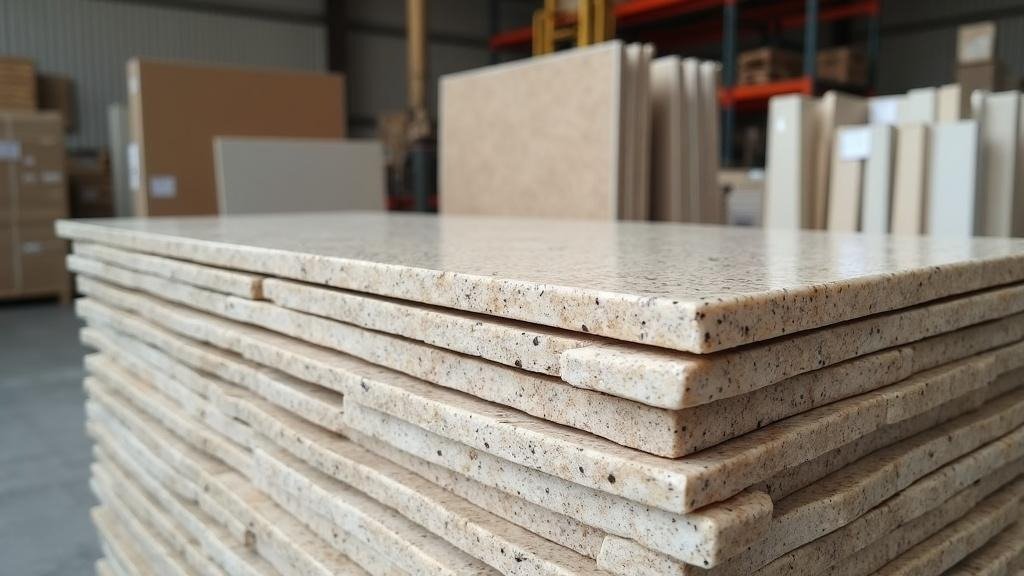
12 Countertop Software Picks I’d Actually Put in a Commercial Fab Shop in 2026

The past two years shifted things. AI-assisted nesting moved from a niche experiment to a real production tool, cloud quoting killed a lot of the fax-and-spreadsheet workflows shops were still running as recently as 2023, and a handful of purpose-built stone platforms started bundling quote-to-payment in ways that used to require three separate subscriptions. If you’re running a commercial countertop operation right now, the choices are genuinely better than they were, and also more confusing.
This list covers what I’d consider for a shop doing real volume: CNC-equipped, juggling multiple jobs, bidding on commercial installs where margin matters. I’m not listing hobbyist CAD tools or generic construction PM software that someone shoehorned into a stone shop.
What I Looked At
- Stone-specificity: Does it understand slabs, seams, sink cutouts, and vein direction? Or is it generic job-shop software with a stone skin?
- Quote-to-close flow: Can a salesperson build and send a quote without touching a separate system?
- CNC readiness: DXF handling, nesting quality, file prep that doesn’t require a CAD tech to babysit it.
- Pricing transparency: I favor tools with public pricing over “call for a demo” gatekeeping.
- Fit for commercial scale: Multi-job batching, scheduling, inventory, and team access matter more here than for a two-person residential shop.
The 12 Picks
1. SlabWise
The vein-aware AI nesting is the thing that earns the top spot. Most nesting tools treat a slab as a rectangle. SlabWise’s engine accounts for veining, book-matching, and edge rotation when batching multiple jobs onto one slab simultaneously, which is where yield gains actually happen in a busy shop. The other piece that matters for commercial fabricators is the DXF middleware layer: it validates geometry and catches sink cutout errors before files hit the CNC, not after a $400 piece of quartzite is already on the table. Quoting runs from DXF measurements through a tiered Good/Better/Best material presentation to e-signature and Stripe payment collection without leaving the platform. The $1 seven-day trial is a no-commitment way to test it against your real jobs. Pricing runs from roughly $99/month at the entry tier to $299/month for the Pro plan with unlimited active jobs.
2. Moraware CounterGo
CounterGo is the most widely deployed countertop quoting tool in North America, with over 2,600 fabricators on the Moraware platform. The drawing-and-quoting workflow is mature and fast. At around $100 per user per month, it’s mid-range on cost, and the learning curve is genuinely short. For a shop that needs reliable quoting with a proven track record and doesn’t need AI nesting baked in, CounterGo is hard to argue against.
3. Moraware Systemize
Systemize is the scheduling and job-tracking arm of the Moraware family. Starting around $200 to $400 per month depending on modules, with additional user fees after five seats, it sits on top of CounterGo and turns a quote into a tracked production job. Commercial shops with dedicated installers and schedulers benefit most. It’s the closest thing to an industry-standard shop floor tool in stone fabrication.
4. ActionFlow
ActionFlow focuses on workflow automation inside a fabrication business. Think automated notifications, job status triggers, and reducing the manual handoffs between quoting, templating, production, and install. It integrates with Moraware products. For a shop losing hours to “who told who what,” this layer pays for itself fast.
5. FabSuite
FabSuite covers shop management with a strong inventory angle. It tracks slab inventory, links jobs to specific slab remnants, handles scheduling, and produces job documentation. It’s a better fit for shops that buy and sell slab inventory alongside fabrication, or that need tight remnant tracking for commercial projects where material accountability matters.
6. SigmaNEST
SigmaNEST is industrial-grade CNC nesting software used across metal, glass, and stone. The nesting algorithms are among the most sophisticated available anywhere, built for maximizing material yield on expensive sheet goods. It is not a stone-specific quoting or shop management tool; you’ll need other software alongside it. But for a high-volume operation with a serious CNC program and a CAD/CAM tech on staff, the yield optimization at scale is real.
7. EasySTONE / EasyStoneShop
EasySTONE is a CAD/CAM platform originally built for the European stone market and now available in the US. The EasyStoneShop tier starts around $150 per month and includes both design and shop management functionality. It handles 3D modeling of stone pieces, machining paths, and job tracking. Shops that do elaborate custom work with complex geometry will find the CAD depth useful. The interface takes time to learn.
8. Moraware SlabWare
SlabWare (Moraware’s product, distinct from SlabWise) focuses on the distribution and inventory side of the slab business. It’s built more for slab distributors and yards than for fabrication shops, but a commercial fab operation that also warehouses and sells material can use it to track slab lots, locations, and availability. Worth knowing about if your shop crosses into distribution.
9. QuickBooks + Stone-Specific Add-Ons
A lot of commercial shops still run QuickBooks for financials and bolt on a stone-specific tool for quoting and scheduling. It works, mostly. QuickBooks Online runs $30 to $200 per month depending on the plan. The limitation is that QuickBooks has no concept of a slab, a seam, or a CNC file. Every handoff between the stone tool and the accounting layer is a potential error. It’s a functional stack for a shop not ready to consolidate, but it’s not a long-term answer for growth.
10. Google Sheets / Excel Custom Builds
I’m including this because plenty of commercial shops still run on spreadsheets for quoting and job tracking, and I want to be honest: it can work at low volume. At commercial scale, with multiple estimators and jobs moving through production simultaneously, version control becomes a real problem. A sheet that one person is editing is not a live job board. This belongs in the “graduating from” category, not the “settling into” one.
See also: AI for Small Businesses: How to Leverage Smart Tech to Boost Growth
11. JobNimbus
JobNimbus is a general contractor CRM and job management tool that some stone shops use, particularly those doing multi-trade installs. It handles leads, proposals, and project tracking but has no stone-specific functionality. No nesting, no DXF handling, no slab inventory. Useful if your commercial operation is heavily sales-and-CRM-driven and you’re pairing it with a dedicated stone tool for production.
12. Monday.com / Asana Custom Workflows
Project management platforms like Monday.com (starting around $9 to $19 per seat per month) get used in larger commercial fab shops for coordinating installs, subcontractors, and project timelines on big commercial jobs. Again, zero stone-specific functionality. They work as a coordination layer on top of a real fab platform, not as a replacement for one.
How to Choose
Start with your actual bottleneck. If you’re losing margin to slab waste, nesting is the priority. If quotes are slow and close rates are low, quoting and presentation tools matter more. If jobs fall through the cracks between estimating and install, scheduling and workflow tools are where to invest first. No single platform is the right fit for every operation, but the best commercial fab shops I’ve seen pick one primary system and actually use it fully before adding layers.
Common Questions
Does CounterGo handle CNC file output, or does it stop at quoting?
CounterGo is a quoting and drawing tool, not a CAD/CAM platform. It produces accurate job drawings and quotes but does not generate CNC-ready DXF files or nesting layouts. Shops using CounterGo for quoting typically pair it with a dedicated nesting tool or send drawings to a CAM tech who works in separate software.
Can SlabWise handle vein-matched book-matching across multiple jobs on the same slab?
Yes, that is specifically what the vein-aware nesting engine is built to do. It accounts for vein direction, rotation, and book-match alignment when placing parts from multiple jobs onto a single slab simultaneously. That multi-job batching is where the real yield improvement shows up compared to single-job nesting tools.
Is Moraware Systemize worth the added cost if a shop already runs CounterGo?
For shops with dedicated schedulers and installers managing five or more active jobs at once, Systemize adds genuine value by converting quotes into tracked production jobs with status visibility across the floor. Smaller operations doing under ten jobs a week may find CounterGo alone covers enough ground to justify holding off on the added monthly spend.
What separates SigmaNEST from the stone-specific nesting in platforms like SlabWise or EasySTONE?
SigmaNEST is a general industrial nesting engine with extremely sophisticated algorithms, but it has no native understanding of stone-specific variables like vein direction, remnant tracking by slab lot, or sink cutout validation. Stone-specific platforms trade some raw nesting power for workflow context that matters on the shop floor, including material costing and DXF error checking built into the same tool.
For a shop crossing into slab distribution, is Moraware SlabWare actually separate from Systemize?
Yes, SlabWare is a distinct Moraware product aimed at slab yards and distributors rather than fabrication shops. It tracks slab lots, bundle locations, and availability across a warehouse. A fab shop that also sells raw slabs to other fabricators can run SlabWare alongside Systemize, but a pure fabrication operation with no distribution side has little reason to add it.
Sources
- Moraware public pricing and product pages (moraware.com)
- SigmaNEST product documentation (sigmanest.com)
- EasySTONE / EasyStoneShop public pricing (easystone.com)
- QuickBooks Online pricing (quickbooks.intuit.com)
- Monday.com public pricing (monday.com)
- FabSuite product overview (fabsuite.com)